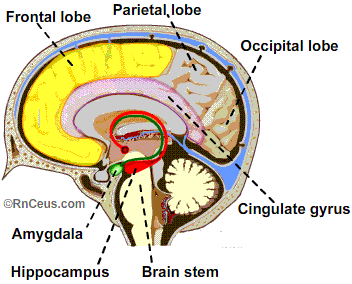
HAD formerly known as AIDS Dementia Complex (ADC) is an AIDS-defining condition that can be a serious problem with a poor prognosis. HAD is a term used to describe the most severe cognitive, motor and behavioral neurological impairments associated with HIV. The effects of HAD can significantly decrease patient independence and quality of life.
HAD is a subcortical dementia, affecting structures beneath the cerebral cortex. Dopamine transport in the basal ganglia is known to be diminshed in HIV + patients with dementia. HIV-associated neurocognitive disorders (including dementia) share many features with diseases such as Parkinson's disease and Huntington disease. People with damage or dysfunction in the basal ganglia have slower thought processes (bradyphrenia), and move more slowly (bradykinesia). They are forgetful, but may often recall information if given enough time. Individuals with HAD exhibit severe cognitive, motor, and neurological impairments that seriously impair day-to-day functioning in the later stages of the disease process.
Diagnosis is difficult, as symptoms may vary. A thorough evaluation is necessary to determine the cause of cognitive impairment and appropriate treatment. Procedures used in the diagnostic process include: neuropsychological testing; mental status examination; neuropsychiatric interview; neurologic examination; and radiologic and laboratory testing.
Currently, combined antiretroviral therapy is effectively suppressing viral replication and viral suppression is associated with less HIV related neuropathology. There is increasing evidence that HIV is developing resistance to HAART. Strict HAART compliance is the most effective means to avoid the progressive neurocognitive and motor effects of HIV.
|
AREAS
IN THE BRAIN IMPACTED BY HIV |
|
| FRONTAL: loss of organizational skills; disinhibition | BASAL GANGLIA: involuntary movements |
| LIMBIC/TEMPORAL: language impairment, memory loss | BRAIN STEM: gait, visual disturbances |
Instant feedback
The following is a list of disorders associated with dementia :
* Learning problem
* Addiction
* Dysarthria or Involuntary Movement
* Somatic or Sexual Dysfunction
* Psychosis
* Sexually Deviant Behavior
* Depressed Mood
* Anxious / Fearful or Dependent Personality
* Hypo/Hyperactivity
* Dramatic / Erratic or Antisocial Personality
* Odd or Eccentric or Suspicious Personality
Cognitive Symptoms Of HAD:
|
Symptom |
Example |
Interventions |
| Severe confusion | Unawareness of illness; Difficulty following directions. | Talk in a calm, slow manner, using simple information. |
| Delayed or absent verbal responses | Language difficulties | Communicate to person using nonverbal gestures such as touching and smiling. Simplify questions which require a yes or no answer. Obtain evaluation by a Speech-Language Pathologist for speech and swallowing difficulties. |
| Global deterioration | Difficulty generating ideas; Mutism | Provide a board with pictures of common objects to which the person can point when making needs known. |
 |
Assess
the photo to the left. Click a button below for the answer
|