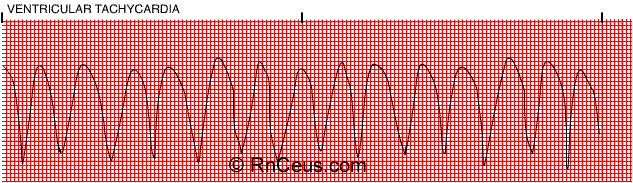
Ventricular Tachycardia
| Rate |
|
| P wave |
|
| QRS |
|
| Conduction |
|
| Rhythm |
|
Ventricular tachycardia almost always occurs in diseased hearts.
Some common causes are:
- CAD
- acute MI
- digitalis toxicity
- CHF
- ventricular aneurysms.
Patients are often symptomatic with this dysrhythmia.
Ventricular tachycardia can quickly deteriorate into ventricular fibrillation.
- Electrical countershock is the intervention of choice if the patient is symptomatic and rapidly deteriorating.
- Some pharmacological interventions include amiodarone and lidocaine.
Instant Feedback:
Ventricular tachycardia is characterized by:
©RnCeus.com