Septal
Development
Between 22 and 28 days after conception, the
fetal heart is transformed from a pulsatile tube into the hollow
single chambered pump pictured below. During the fourth week of development, the heart tube begins looping to form a shape that more closely resembles the adult heart. Around day 28 new
structures begin to form which direct and divide the flow of
blood inside the heart.
Endocardial cushions
The first division is accomplished by the
endocardial cushions. The atrioventricular cushions are derived from endocardial cell proliferation and migration. The endocardial cushions begin the
separation of the heart into right and left, upper and lower
chambers. These chambers will become the atria and ventricles. The
endocardial cushions are crucial to formation of the atrial and
ventricular.
The Atrial Septum
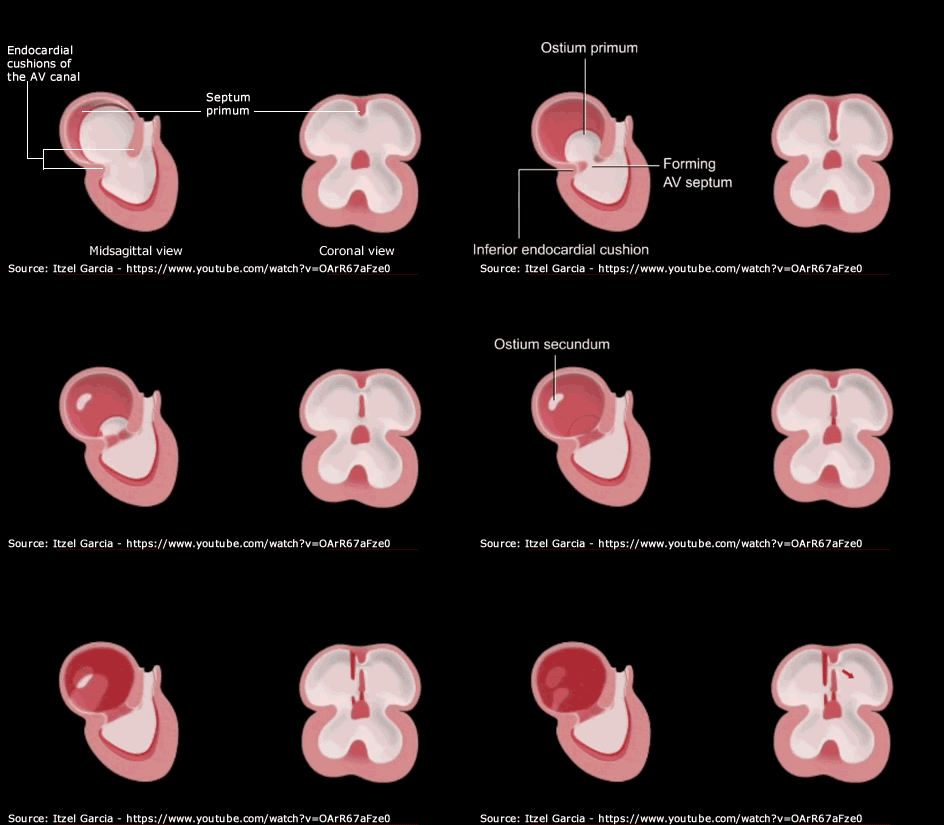 Atrial division begins
around day 33, about the same time nostrils and hand plates are
developing. The atrial septum begins as a thin walled sagittal fold in the common atrium that grows toward the cardiac cushions. The common atrium is divided by the atrial septum, also known as the septum
primum.
The atrial septum reduces the flow of oxygenated blood
from the right atrium to the left. It continues to grow until the
foramen primum is closed. However, as the flow of oxygenated
blood across the foramen primum almost ceases, a focal area of cellular
death occurs in the atrial septum causing an opening to form
called the foramen secundum. The foramen secundum allows for
continued delivery of oxygenated blood to the left atrium.
Septum secundum begins forming about day 38 and
is complete by day 45. It is thicker than the atrial septum and
overlaps the foramen secundum, creating the foramen ovale.
The foramen ovale establishes a one-way passage for blood from
the right atrium to the left. Oxygenated blood from the placenta
is thus directed into two streams, one across the foramen ovale
to the left atrium and onward to the aorta, the other to the
pulmonary vasculature.
Atrial division begins
around day 33, about the same time nostrils and hand plates are
developing. The atrial septum begins as a thin walled sagittal fold in the common atrium that grows toward the cardiac cushions. The common atrium is divided by the atrial septum, also known as the septum
primum.
The atrial septum reduces the flow of oxygenated blood
from the right atrium to the left. It continues to grow until the
foramen primum is closed. However, as the flow of oxygenated
blood across the foramen primum almost ceases, a focal area of cellular
death occurs in the atrial septum causing an opening to form
called the foramen secundum. The foramen secundum allows for
continued delivery of oxygenated blood to the left atrium.
Septum secundum begins forming about day 38 and
is complete by day 45. It is thicker than the atrial septum and
overlaps the foramen secundum, creating the foramen ovale.
The foramen ovale establishes a one-way passage for blood from
the right atrium to the left. Oxygenated blood from the placenta
is thus directed into two streams, one across the foramen ovale
to the left atrium and onward to the aorta, the other to the
pulmonary vasculature.
Interventricular Septum
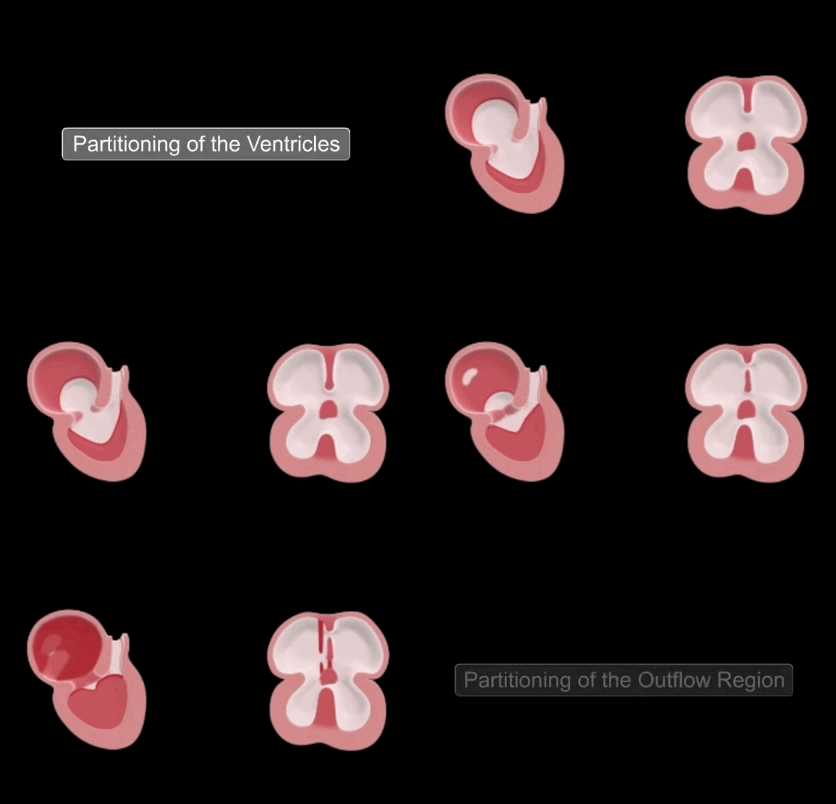 The interventricular septum and the atrial septum begin to about the same time, near the end of the fourth week/beginning of the fifth week. The interventricular septum is composed of three components (Bahtia 2020):
- The thick muscular bands of the interventricular septum are derived from the ventricular walls and grow outward toward the endocardial cushions.
When this muscular septum is complete, a large opening (the
interventricular foramen) still remains between the two
ventricles.
- Membranous interventricular septum is formed by the downward growth of the aorticopulmonary septum towards the muscular interventricular septum and posterior-inferior proliferation of tissue from the endocardial cushions.
- The infundibular septum is in continuation with the atrioventricular canal. (See septal zone graphic)
The interventricular foramen is usually
completely closed by week seven.
Instant Feedback:
The heart is divided into a two chambered pump by the endocardial cushions.
References
Annabi M.R., Kerndt C.C., Makaryus A.N. [Updated 2022]. Embryology, Atrioventricular Septum. [Updated 2022 May In: StatPearls [Internet]. Treasure Island (FL): StatPearls Publishing. https://www.ncbi.nlm.nih.gov/books/NBK482372/
Bhatia, S., Munir, S., Aly, A. (n.d.). Pediatric cardiology part 1. Embryology.
Retrieved July 9, 2022, from https://www.utmb.edu/pedi_ed/CoreV2/CardiologyPart1/CardiologyPart13.html
Haddad F., Hunt, S. A., Rosenthal, D. N., & Murphy, D. J. (2008). Right ventricular function in cardiovascular disease, part I. Circulation, 117(11), 1436–1448. https://doi.org/10.1161/circulationaha.107.653576
©RnCeus.com